
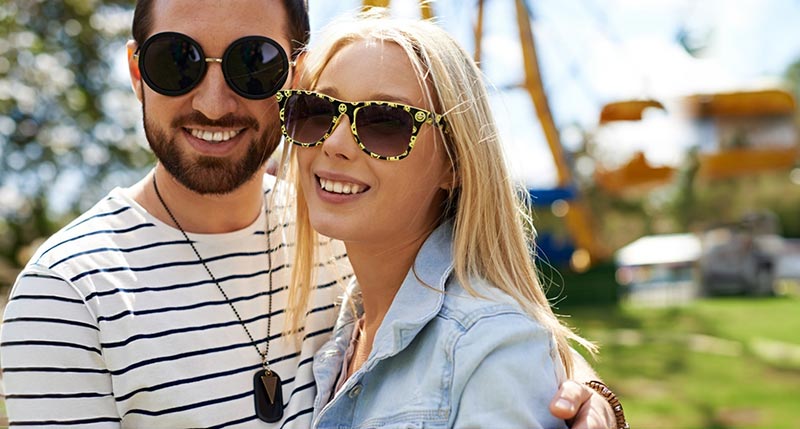
Sunglasses are one of the few accessories that enhance your look while protecting your health. They reduce glare, improve comfort, shield your eyes from harmful ultraviolet (UV) rays, and make outdoor activities more enjoyable.
Did you know that beyond their practical benefits, sunglasses have a fascinating history?
Here are 10 fun facts about sunglasses that may surprise you.
- Sunglasses Are More Than 2,000 Years Old
Modern sunglasses have ancient roots.
Thousands of years ago, the Inuit people in the Arctic crafted early “snow goggles” from bone, ivory, or wood. Without the benefit of modern glass lenses, they carved narrow slits to reduce glare from sunlight reflecting off of snow, which protected their eyes from snow blindness.
Today, polarized sunglasses accomplish that goal using sophisticated lens technology.
- Your Eyes Can Get Sunburned
Most people know that sunscreen can protect your skin from the sun’s UV rays, but did you know that your eyes can also suffer from too much sun?
Overexposure to UV light can cause a painful condition called photokeratitis—basically a sunburn of your eye (ouch!). Long-term UV exposure is also linked to cataract formation and other eye conditions.
That’s why we repeatedly tell our patients to wear quality sunglasses with 100% UVA and UVB protection all year long, every time you go outside—not just in summer.
- Kids Need Sunglasses Even More Than Adults
Children spend significantly more time outside than most adults, and their large pupils allow more UV light to reach their retinas. That’s a recipe for disaster.
The habits children develop early – both good and bad – often last a lifetime.
One easy way to encourage children to wear sunglasses? Wear yours!
Children will do what you do (if not always what you say). When they see Mom and Dad putting on sunglasses, they quickly learn that protecting their eyes is simply part of going outside.
- Polarized Lenses Don’t Just Make Things Darker
Many people assume darker lenses mean better vision in bright conditions. Not true.
The biggest benefit of polarized sunglasses is glare reduction.
By filtering out the horizontal rays reflected from roads, lakes, beaches, windshields, and sidewalks, polarized lenses help you see with clarity and comfort while they reduce squinting and eye fatigue.
- Cloudy Days Still Call for Sunglasses
Here’s a surprise: Up to 80% of the sun’s UV rays can pass through clouds. That means your eyes are still exposed to harmful rays even when the sky looks overcast.
If you’re spending time outside, wear your sunglasses. Every day!
- Some Dogs Really Do Benefit from Sunglasses
Have you ever seen a dog wearing goggles while riding on a motorcycle or sticking its head out of a car window? Too cute!
It looks adorable, and there can also be a practical reason for those doggie shades.
Protective eyewear designed specifically for dogs shields their eyes from wind, dust, debris, and UV rays during outdoor adventures. They’re especially helpful for working dogs, hiking companions, dogs on boats, and after eye surgery.
While most family pets don’t need sunglasses for everyday walks, some active dogs can genuinely benefit from eye protection.
- Every Eye Color Needs Sunglasses for UV Protection
People with blue, green, or gray eyes are often more sensitive to bright sunlight because they have less pigment in their irises.
However, regardless of eye color, everyone needs UV protection. Brown eyes aren’t immune to sun damage or the eye conditions associated with it, even if they tolerate bright light a little better.
- Sunglasses Were Pop Culture Icons Way Before Social Media
Some accessories never go out of style. Sunglasses are one of them.
Over the decades, sunglasses have become synonymous with movie stars, musicians, athletes, pilots, and adventurers. They’ve been worn by everyone from Audrey Hepburn and James Dean to Tom Cruise’s famous aviator look in Top Gun.
While fashions change, one thing hasn’t: Quality sunglasses continue to combine style with eye protection. One 1980s rocker even claims to wear his at night.
- Not Every Pair of Sunglasses Protects Your Eyes Equally
A darker lens doesn’t automatically provide better UV protection.
In fact, very dark lenses without proper UV protection can actually harm your eyes because your pupils open up more widely behind the dark tint, potentially allowing even more harmful UV light into the structures of your eye.
The most important feature to look for in sunglasses? Lenses that block 100% of UVA and UVB rays. If you need a pair, we can help.
- The Best Sunglasses Are the Pair You’ll Actually Wear
The perfect sunglasses are the ones that fit comfortably, provide excellent vision, and make you want to wear them every time you go outside.
Whether you’re driving, golfing, gardening, boating, hiking, coaching your child’s soccer team, or simply relaxing on the patio, comfortable sunglasses make every outdoor activity easier on your eyes.
Protect Your Eyes in Every Season
Much more than a fashion statement, sunglasses are an important part of maintaining lifelong eye health.
If you’re ready for a new pair, stop by our optical department. We’ve got new styles arriving weekly, and our optical experts will help you find a pair that flatters your face shape and offers outstanding UV protection, excellent visual clarity, and a comfortable fit for your lifestyle.
Your eyes work hard every day. Reward them with the stylish protection they need and deserve—rain or shine.